
6 min read • 1,192 words
Could Quantum Computers Break Today’s — As the digital landscape continues to evolve, the emergence of quantum Learn more about the steps and the final checks.
At the heart of this concern is Shor’s algorithm, which enables quantum computers to factor large numbers exponentially faster than classical computers. While current quantum technology is not yet powerful enough to compromise existing encryption standards, rapid advancements in the field suggest that a breakthrough could be just around the corner. In response, researchers are actively developing post-quantum cryptography to safeguard against these looming threats, ensuring that our internet security remains robust in the face of potential quantum challenges.
Understanding Quantum Computing
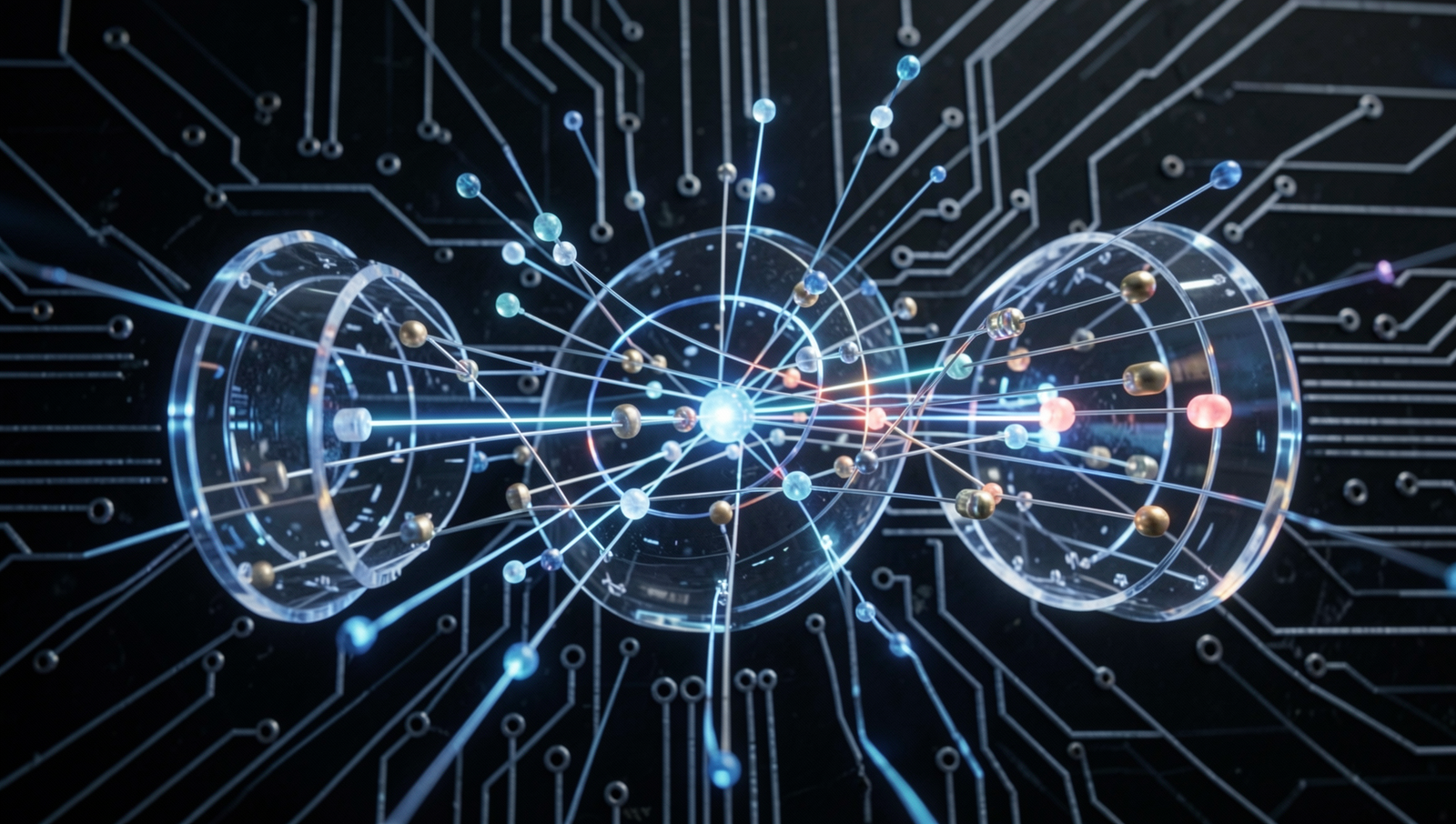
Quantum computing is a revolutionary technology that leverages the principles of quantum mechanics to process information. Unlike classical computers, which use bits as the smallest unit of data (0s and 1s), quantum computers utilize qubits. A qubit can exist in multiple states simultaneously, thanks to the phenomena of superposition and entanglement. This allows quantum computers to perform complex calculations at unprecedented speeds.
In comparison to classical computing, quantum computing offers several advantages:
- Parallelism: Quantum computers can process multiple possibilities at once.
- Speed: Certain algorithms, like Shor’s algorithm for factoring large numbers, can run exponentially faster on quantum computers.
- Complex problem solving: Quantum computers excel in optimization and simulation tasks that are infeasible for classical computers.
Key technologies enabling quantum computers include:
- Superconducting qubits: These are circuits that operate at extremely low temperatures to achieve quantum states.
- Trapped ions: Ions are manipulated using lasers to perform quantum operations.
- Topological qubits: These are theoretical constructs that promise greater stability and error resistance.
The current state of quantum computing research is rapidly evolving. Major tech companies and research institutions are investing heavily in developing practical quantum computers. While we are still in the early stages, advancements are being made that could eventually impact quantum computers internet security, particularly in the realm of cryptography.
Current Internet Security Protocols
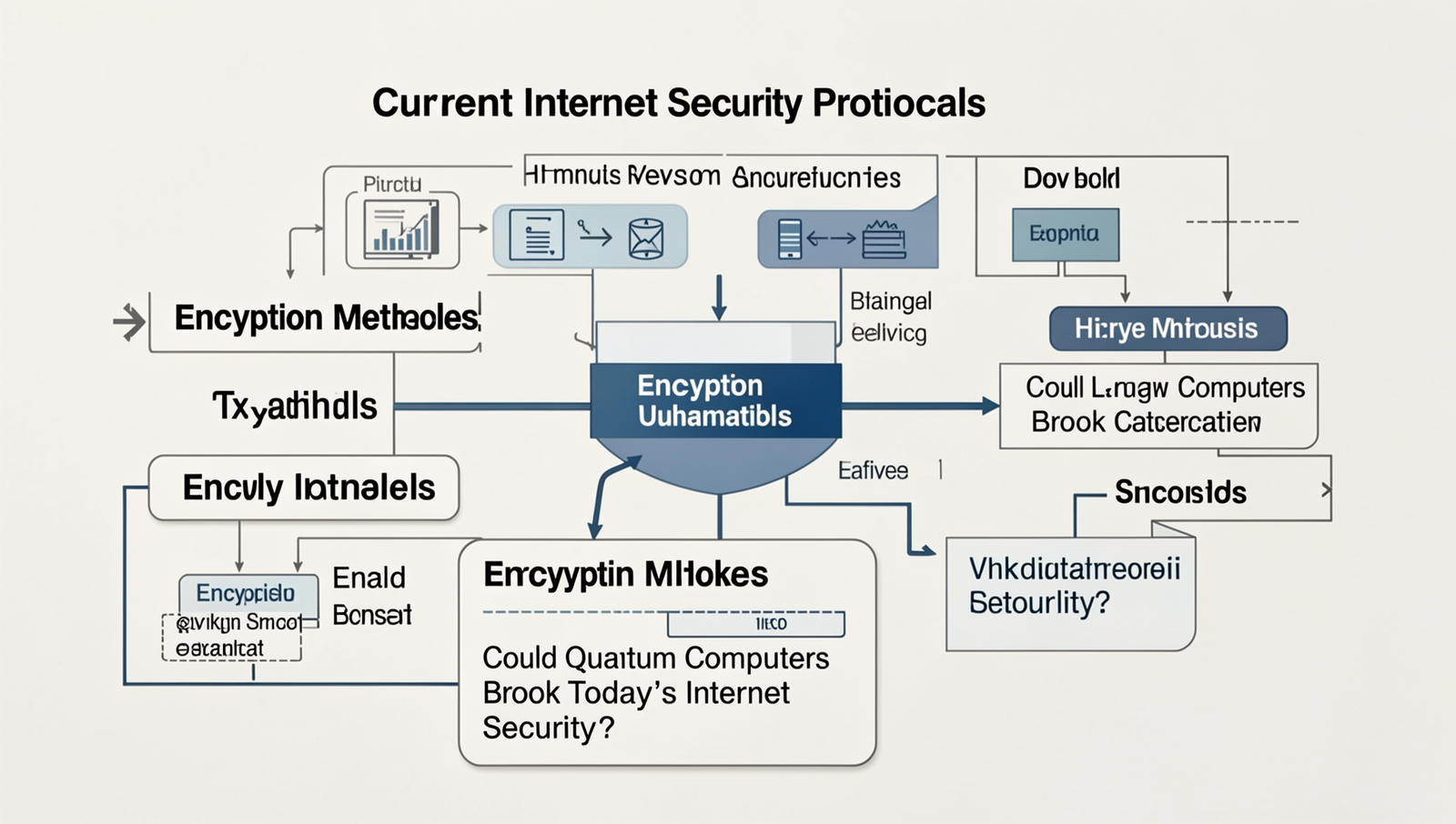
Today’s internet security relies heavily on various encryption methods to protect sensitive data. The most common encryption techniques include:
- Symmetric Encryption: Uses the same key for both encryption and decryption, making it fast but requiring secure key distribution.
- Asymmetric Encryption: Involves a pair of keys (public and private) for secure communication, commonly used in SSL/TLS protocols.
- Hash Functions: Transform data into a fixed-size string of characters, ensuring data integrity without revealing the original data.
The role of Public Key Infrastructure (PKI) is crucial in managing digital certificates and public keys, facilitating secure communications over the internet. PKI ensures that users can trust the identities of the entities they are communicating with, which is fundamental for e-commerce and online banking.
However, current security protocols have vulnerabilities. For instance, the reliance on RSA and ECC (Elliptic Curve Cryptography) for asymmetric encryption makes them susceptible to attacks from quantum computers. Quantum algorithms, such as Shor’s algorithm, can potentially break these encryption methods, rendering them ineffective.
The impact of quantum computing on internet security is profound. As quantum computers become more powerful, they could compromise the confidentiality and integrity of data transmitted over the internet, leading to significant security breaches and loss of trust in digital communications.
Future Implications and Solutions
The rapid advancement of quantum computers poses significant challenges to today’s internet security. Experts predict that within the next decade, quantum computers may achieve the capability to break widely used encryption methods. This timeline emphasizes the urgency for organizations to adapt their cybersecurity measures.
To mitigate the risks associated with quantum computing, several strategies for post-quantum cryptography are being explored:
- Development of quantum-resistant algorithms that can withstand quantum attacks.
- Implementation of hybrid systems that combine classical and quantum-resistant encryption.
- Regular updates to cryptographic protocols to incorporate new findings in quantum research.
Collaboration among governments, academia, and industry is crucial for effective cybersecurity adaptation. Initiatives such as:
- Joint research projects to develop new cryptographic standards.
- Information sharing platforms to disseminate knowledge on quantum threats.
- Workshops and conferences focused on quantum security advancements.
Moreover, regulatory and ethical considerations must be addressed to ensure the responsible use of quantum technology. Policymakers need to establish frameworks that govern:
- Data privacy in a quantum computing context.
- Accountability for quantum-enabled cybercrimes.
- International cooperation to prevent a quantum arms race.
In conclusion, as quantum computers evolve, proactive measures in internet security will be essential to safeguard sensitive information and maintain trust in digital systems.
Conclusion
As we delve deeper into the capabilities of quantum computers, it becomes increasingly clear that they pose a significant threat to today’s internet security. The potential for quantum algorithms to break widely used encryption methods raises critical concerns for data protection and privacy. Organizations must begin to assess their security frameworks and consider the implications of quantum computing on their systems, as the transition to quantum-resistant algorithms is essential to safeguard sensitive information.
While the full realization of quantum computers is still on the horizon, proactive measures can be taken to mitigate risks associated with quantum threats. By investing in research and development of quantum-safe encryption techniques, businesses and governments can better prepare for a future where quantum computers may compromise current security protocols. The ongoing dialogue about quantum computers and internet security is vital to ensure that we stay ahead of potential vulnerabilities and protect our digital landscape.
Frequently Asked Questions
Could quantum computers break current encryption methods?
Yes, quantum computers have the potential to break many of the encryption methods currently used to secure data on the internet. Algorithms such as RSA and ECC, which are widely used for securing communications, could be compromised by quantum algorithms like Shor’s algorithm, which can factor large numbers exponentially faster than classical computers.
What is the main threat of quantum computing to internet security?
The main threat of quantum computing to internet security lies in its ability to efficiently solve problems that are currently intractable for classical computers. This includes breaking encryption schemes that protect sensitive information, such as financial transactions, personal data, and secure communications, thereby exposing this data to potential theft or manipulation.
When might quantum computers become a threat to internet security?
While practical quantum computers capable of breaking current encryption methods are not yet available, experts estimate that this could happen within the next decade or two. The timeline is uncertain and depends on advancements in quantum technology and the development of more powerful quantum algorithms.
What can be done to protect against quantum threats?
To protect against potential quantum threats, researchers are working on post-quantum cryptography, which involves developing new encryption methods that are secure against quantum attacks. Organizations are encouraged to begin transitioning to these new standards to safeguard their data in anticipation of future quantum capabilities.