

6 min read • 1,142 words
What Do VPNs Actually Protect You — In today’s digital age, understanding online privacy and security is more Learn more about the steps and the final checks.
VPNs have become a popular tool for those seeking to enhance their online security and privacy. By encrypting your internet traffic and masking your IP address, VPNs provide a robust layer of protection against potential threats. Additionally, they offer solutions for common issues such as bandwidth throttling by ISPs and security risks associated with public Wi-Fi networks. Join us as we uncover the essential benefits of using a VPN and answer the question: what do VPNs protect you from?
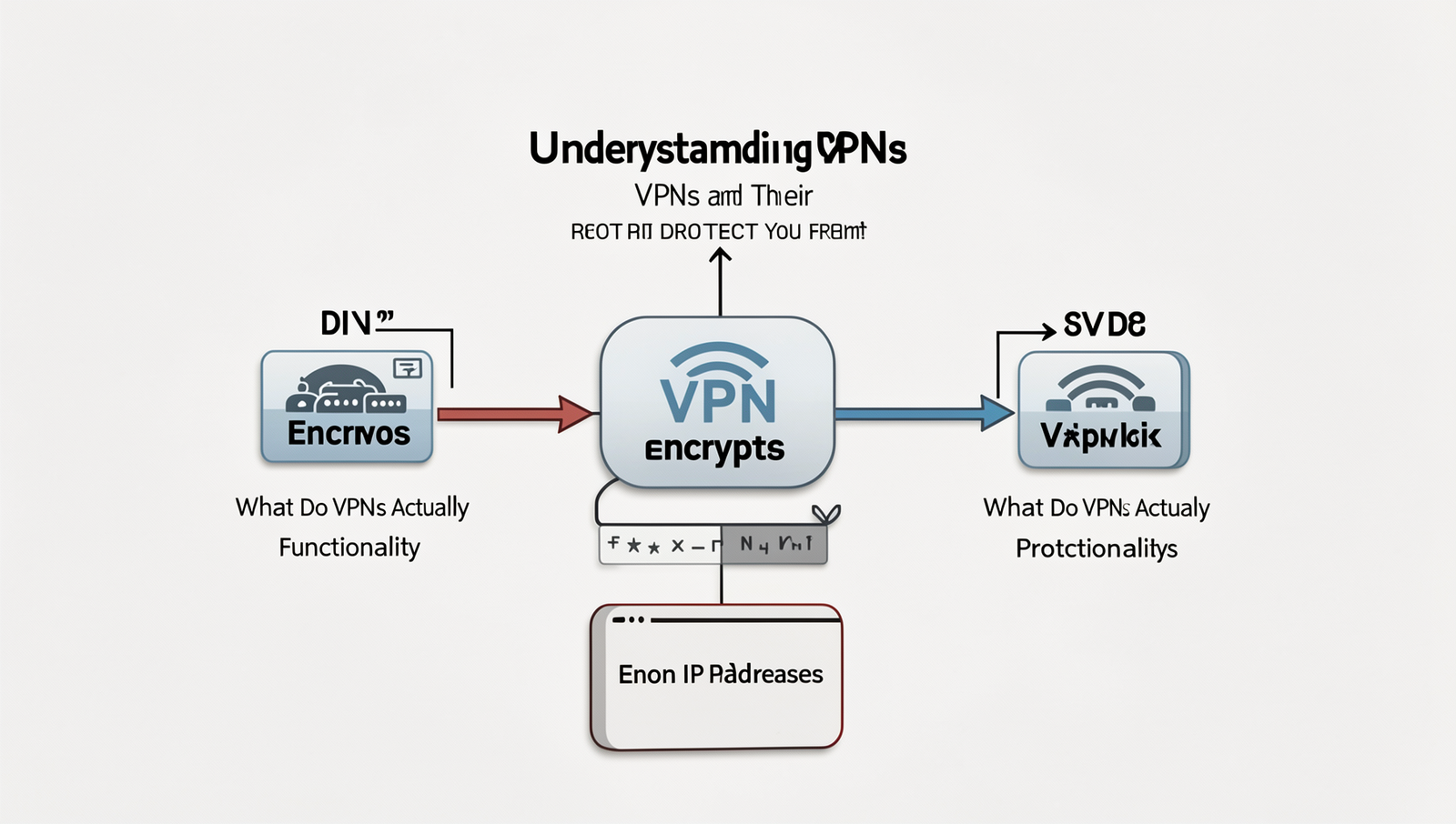
Understanding VPNs and Their Functionality
A Virtual Private Network (VPN) is a technology that creates a secure and encrypted connection over a less secure network, such as the Internet. By routing your internet traffic through a remote server, a VPN masks your IP address and encrypts your data, making it difficult for third parties to track your online activities.
VPNs utilize various protocols to establish secure connections. Some of the most common VPN protocols include:
- OpenVPN: An open-source protocol known for its strong security and flexibility.
- L2TP/IPsec: Combines Layer 2 Tunneling Protocol with IPsec for enhanced security.
- IKEv2: A fast and secure protocol that is particularly effective for mobile devices.
When you connect to a VPN, your data is encrypted using protocols that secure your information from potential eavesdroppers. This encryption process ensures that even if your data is intercepted, it remains unreadable without the proper decryption key. Additionally, by masking your IP address, VPNs help protect your identity and location.
Common use cases for VPNs include:
- Remote Work: Employees can securely access company resources from anywhere.
- Bypassing Geo-Restrictions: Users can access content that may be blocked in their region, such as streaming services.
- Enhanced Privacy: Individuals can browse the internet without being tracked by advertisers or ISPs.
In summary, understanding what do VPNs protect you from is crucial for anyone looking to enhance their online security and privacy.
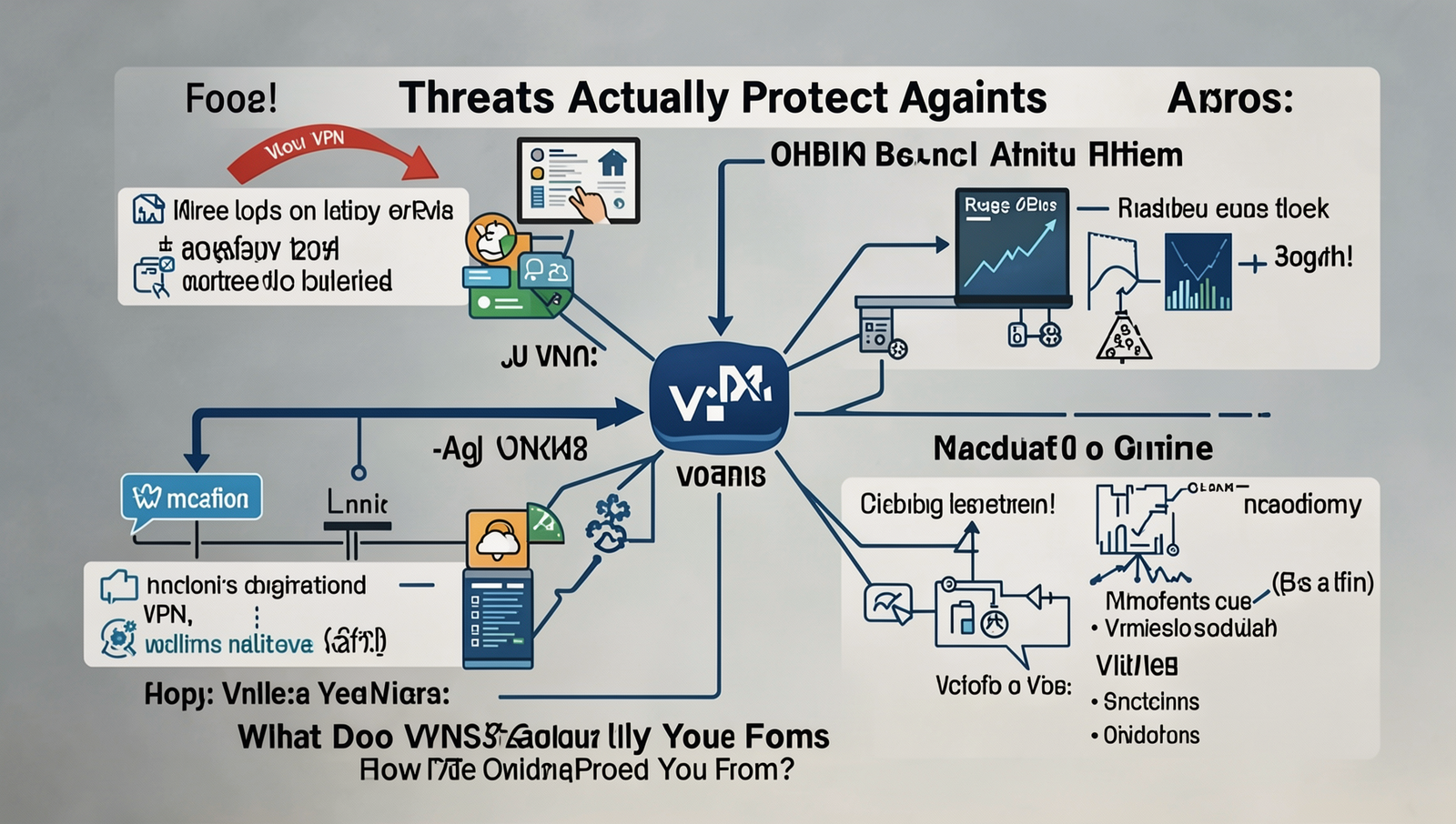
Threats VPNs Protect Against
When considering what do VPNs protect you from, it’s essential to understand the various threats that can compromise your online privacy and security. One of the primary threats is ISP tracking and data logging. Internet Service Providers often monitor users’ online activities, collecting data that can be sold to advertisers or used for other purposes. A VPN encrypts your internet traffic, making it difficult for ISPs to track your browsing habits.
Another significant risk arises when using public Wi-Fi networks. These networks are often unsecured, making them vulnerable to man-in-the-middle attacks. In such scenarios, hackers can intercept your data as it travels between your device and the internet. By using a VPN, your connection is encrypted, protecting your sensitive information from potential eavesdroppers.
VPNs also help bypass geo-restrictions and censorship imposed by governments. For instance, if you travel to a country with strict internet regulations, a VPN allows you to access blocked websites and services, ensuring you can browse freely.
Finally, VPNs provide a layer of protection against malicious actors on the internet. Hackers often target unprotected devices to steal personal information. With a VPN, your data is encrypted, making it significantly harder for these malicious actors to access your sensitive information.
- ISP tracking and data logging
- Public Wi-Fi security risks (e.g., man-in-the-middle attacks)
- Geo-restrictions and censorship by governments
- Malicious actors on the internet (e.g., hackers)

Limitations of VPNs and Additional Considerations
While VPNs offer enhanced privacy and security, they are not a comprehensive solution for all online threats. One major limitation is that VPNs do not protect against malware or phishing attacks. Users can still fall victim to malicious software or deceptive websites, which can compromise their data regardless of VPN usage.
Another concern is the potential for data leaks, such as DNS leaks. These leaks can expose your browsing activity to your Internet Service Provider (ISP) or other entities, undermining the privacy that a VPN is supposed to provide. It is crucial to choose a VPN service that has robust leak protection features.
- Reliance on the VPN provider’s privacy policy is essential. If the provider logs user data or has a weak privacy policy, your information may still be at risk.
- Legal implications exist in certain countries where VPN usage is restricted or illegal. Users must be aware of local laws to avoid potential legal issues.
In summary, while VPNs can enhance your online security, understanding what do VPNs protect you from is vital for effective internet safety. Always combine VPN usage with other security measures to ensure comprehensive protection.
Conclusion
In summary, understanding what do VPNs protect you from is essential for anyone considering using this technology. VPNs primarily safeguard your online privacy by encrypting your internet connection, making it difficult for hackers, ISPs, and even government entities to monitor your online activities. Additionally, they help in bypassing geo-restrictions, allowing users to access content that may be blocked in their region.
However, it’s important to note that while VPNs provide a layer of security, they are not a complete solution for all online threats. Users should remain vigilant and combine VPN usage with other security measures, such as strong passwords and antivirus software, to ensure comprehensive protection in the digital landscape.
Frequently Asked Questions
What is a VPN?
A VPN, or Virtual Private Network, is a service that creates a secure connection over the internet between your device and a remote server. It encrypts your internet traffic, making it difficult for third parties to intercept or access your data.
How does a VPN protect my data?
A VPN protects your data by encrypting your internet connection. This means that any data transmitted between your device and the VPN server is scrambled, making it unreadable to anyone who might try to intercept it, such as hackers or government agencies.
Can a VPN hide my IP address?
Yes, a VPN can hide your IP address. When you connect to a VPN, your internet traffic is routed through the VPN server, which assigns you a new IP address. This masks your real IP address, helping to protect your identity and location online.
Are there any limitations to what a VPN can protect against?
While a VPN provides a layer of security and privacy, it does not protect against all online threats. For example, it cannot prevent malware infections, phishing attacks, or data leaks from unsecured applications. It’s important to use additional security measures alongside a VPN.